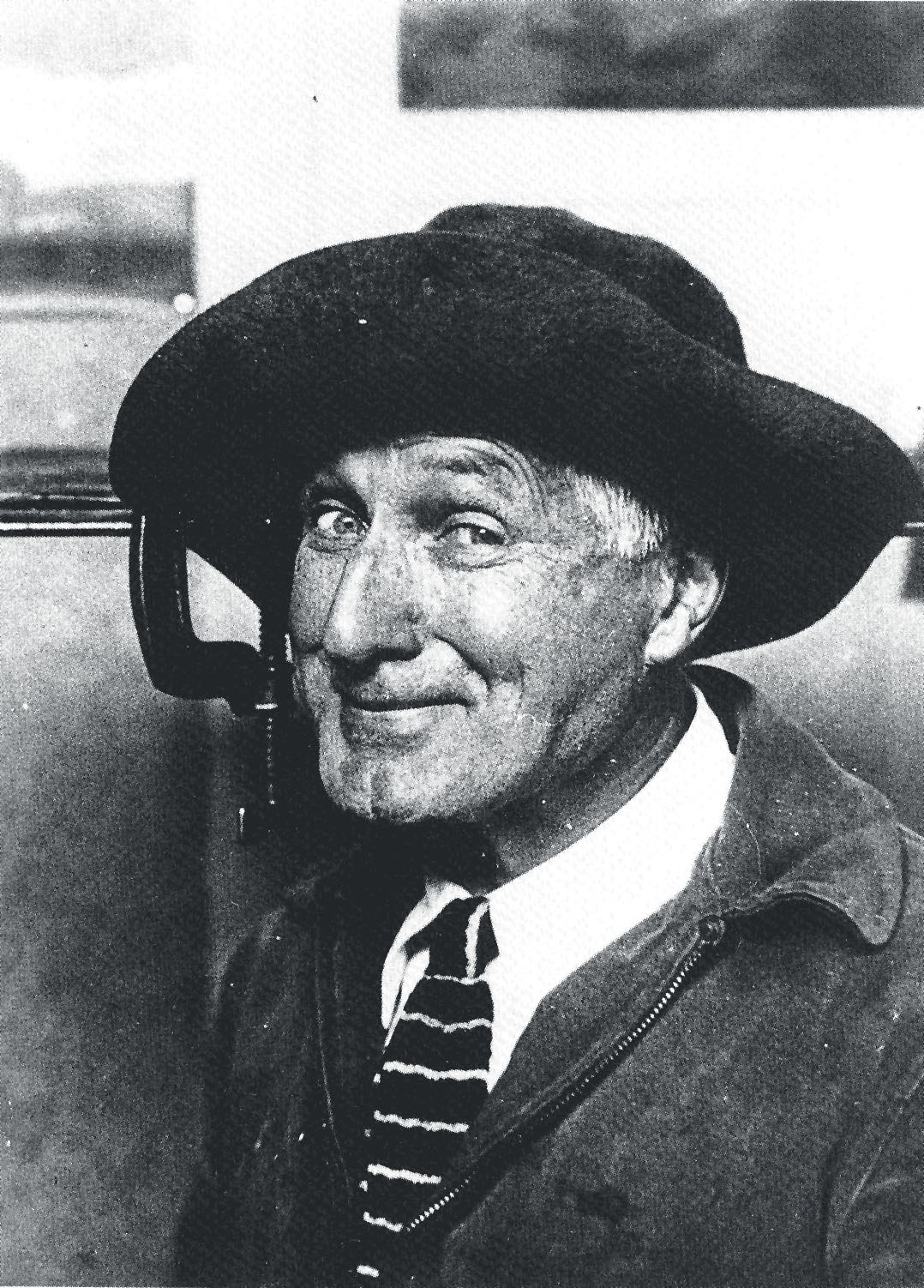
Background information on the artist

Of all the members of the
Cornish Colony,
Parrish was the one who consistently used the address: "Windsor,
VT" as his mailing address from the period 1898 until he
died in 1966. He shopped, banked, and used lawyers and accountants
from Windsor. His friends and acquaintances at Cone Blanchard
and their manufacturing expertise served as the Pied Pipers that
lured and beguiled the man that used to call himself "a mechanic
who paints to maintain his habit of playing with big machines".
All his paintings and murals were shipped from Windsor. It was
his daily routine to visit this town and take part in the politics
of the day. Four Parrish works: The 1908 Collier's Cover: Funnigraph,
the 1941 British War
Relief Poster, the 1939 Vermont Association
for Billboard Restriction: Buy Products NOT Advertised on our
Roadside and the We're
Got It and We'll Hold It (featuring one
of Windsor's beautiful churches, St. Paul's Episcopal) were done
by the artist at the request of various groups and charities that
he favored in the area or (as was the case of Funnigraph), featuring
the Windsor, VT logo and address as part of the composition.
However, much as he loved
the comings
and goings of Windsor, he never forsook the home he built, The
Oaks, situated high on a hill in New Hampshire a short four miles
away across the Connecticut River. The Oaks remained his center
and the source of much of his inspiration through the observation
of the splendid views of nature from up high on the hill.
I have now written fourteen
books on the
artist and curated his National Exhibition which has just finished
its tour of museums around the country. It would seem to be like
gilding the lily to begin with a biographical sketch. I direct
the viewer to one of my many books on the artist.
Nevertheless, Parrish did
not become one
of the most important and beloved artists of the 20th century
in a vacuum, for the viewer to understand more fully the paintings
before him, perhaps a brief retelling of pertinent biographical
data must be done.
Parrish was born Fred
Maxfield Parrish
to Stephen Parrish and his wife, Elizabeth Bancroft Parrish in
Philadelphia July 25, 1870. His father, a well known etcher and
respected painter in his day was his son's first teacher. Together,
father and son toured the museums of Europe when the boy was only
ten and spent many happy hours together painting and sketching
in Europe as well as Maine, Philadelphia and Massachusetts here
in the states. Parrish attended Haverford College and the Pennsylvania
Academy of Arts where his graduating class included the likes
of William Glackens and Florence Scovel Shinn. There he trained
under Robert Vonnoh and Thomas Anschutz. After monitoring some
illustration classes taught by Howard Pyle at the Drexel Institute
and meeting the young instructor, Lydia Austin who was to become
his wife, he began accepting commissions illustrating covers for
several magazines such as Harper's, Century, Ladies Home Journal,
Collier's, Life, Metropolitan, Hearst's and virtually a who's
who of top magazines of the day.
Early covers and
illustrations for books
allowed the young artist and his bride to move to the Cornish/
Windsor area where his father, Stephen had already taken residence.
The artist's patrons and buyers of his art were in the upper echelons
of society, commerce and industry. Names such as Vanderbilt, Whitney,
Astor, Du Pont and Hearst formed the primary core of buyers for
his paintings. After a series of oils illustrating the history
of light for Edison Mazda lights made his name a household one
in the country, the artist began a series of works to be mass
distributed as fine art prints during the 20's. One of these works
the 1922 oil, Daybreak,
became the most reproduced work in the
history of American Art. It is estimated that one out of every
five American homes had a print of Daybreak
hanging in their wall
during the 1920's. One of the models of that work was Kitty Owen,
the granddaughter of William Jennings Bryan. Miss Owen also posed
for the iconic work depicting a dramatic representation of the
Quechee Gorge in Quechee, VT that the artist titled: Canyon.
It was with the commission
for Irenee
Du Pont, the spectacular Du Pont mural in 1933, which prompted
the artist to leave the comfort and security of illustrative work
for the more demanding and infinitely more emotionally satisfying
work of painting what he loved most: the landscapes. Parrish painted
landscapes from that time until 1961, when at the age of ninety
one, the artist laid down his brushes forever. After his death
in 1966, exhibits of his works in galleries and museums began
the artist's climb in the public perception from illustration
into the realm of fine art. Today, the National Exhibition Parrish:
Master of Make-Believe which I had the honor to curate for
the
Trust of Museum Exhibitions in Washington, DC broke attendance
records in four of the six museums that hosted the show. Parrish
has finally come into his own, not only in the hearts of his public,
but also in the acknowledgment of scholars, art connoisseurs and
museums throughout the country.
EARLY WORKS:
(1887-1909)
The earliest work this
exhibit displays
is the pencil, pen and ink double sided figure which the young
seventeen year old presented to his mother, Elizabeth Bancroft
Parrish at the beginning of the year. Suitably titled: 1887 Calendar,
the whimsical work gives the young artist a chance to present
the wonderful, comedic portion of his imagination. It was later
made into an etching by the same name.
The Last Rose of Summer (1898) was an early cover for the
Outing
Magazine that the newly married artist used to help finance the
purchase of his beloved home, The Oaks. The delicate oil on paper
shows the young artist in a classic Greek robe under the magnificent
tree that sheltered his house. Another early example of his
illustration
skills are the pen and ink drawings that he executed for his first
major book commissions: L. Frank Baum's Mother Goose in Prose
(1897); The Golden Age
by Kenneth Grahame (1899); and Washington
Irving's Knickerbockers
History of New York (1900). The three
end pieces collectively titled: What
They Talked About were done for the Kenneth Grahame book
which sold out of its editions
in England and the United States.
Probably some of the best
early magazine
illustrations done by Parrish were the graceful and well executed
Milkmaid
and Poet's Dream
done to illustrate John Milton's poem
L'Allegro in the Century Magazine in 1901. The paintings prompted
Parrish's friend and Cornish neighbor, the sculptor Augustus
Saint-Gaudens,
to proclaim in an illustrated letter to the artist written December
5, 1901:
"These two paintings are among the most beautiful I have
ever seen! To whom do they belong? Could I buy one of them? If
so, I want to do so right away, quick, before some other feller
gets his hands on them".
Unfortunately for the
revered sculptor,
the young painter had sold the works to one of his early society
patrons, Ruth Hay Whitney, Gertrude Vanderbilt Whitney's sister
in law.
The years between 1904 and
1909 saw Parrish
expand his illustration horizons by the book and magazine commissions
that came his way. Edith Wharton the pre-eminent woman writer
of the day commissioned his illustrations for her book Italian
Villas and Their Gardens. Eugene Fields sought the artist
to illustrate
his Poems of Childhood.
Both of these books were published by
Scribner's. Scribner's used the dreamy and mystic like oil Vigil
at Arms, also in this exhibit, as its frontispiece in
their December
1904 issue of Scribner's Magazine to illustrate Stannard Baker's
poem of the same name.
Collier's was the magazine
which had the
most covers with this artist (over a hundred) between 1904 and
1936. Two important early covers: the 1905 Harvest (represented
here with his oil study for the work), and the iconic Alphabet
where the artist depicted his young son puzzling over a dazzling
array of letters in his first book are exhibited here. The 1906
luminous and light filled cover which the artist named Winter
appeared in Collier's near the end of that season when maple sugaring
was just beginning that year. The Decorative
Cover appeared in
1908.
Although the artist had
designed the layout
for his famous Old King
Cole mural to be shown as two different
covers for Collier's
in 1907, they did not appear until April
and May of 1909. The two images of the Old King Cole used
were
the center and right panels discussed below.
During an artistic career as
gallery and
museum director spanning 35 years, it has been my great pleasure
to discover three works that turned out to be original Parrish
paintings. Two of those works will be featured in this exhibit:
Vigil at Arms
and the Study for the Old
King Cole.
Since I have had the
sobriquet of being
considered the "Parrish Authority" I have seen many
images and works purported to be originals which turned out not
to be so, or simply prints of the original. Three times in 35
years I have had the opportunity to report to an owner that what
they may have thought to be a Parrish print or hoped, it might
maybe, MAYBE be an original turned out to be the real thing! In
the early seventies, the owner of the 1904 Vigil at Arms
brought
in what she thought was a print of Parrish left to her in her
father's house which she had just inherited. I had the pleasure
to announce that it was an original oil on paper by the artist.
Three years ago, an Auxiliary in Chicago sent me what they had
hoped might be a Parrish print left for them in their outdoor
donation barrel. It turned out to be the original 1918 Jack Sprat
oil on paper painting.
The third original has just surfaced. It is a study for the St.
Regis Hotel's mural Old
King Cole by Maxfield Parrish. It is even
more defined and finished that the half size study which Maxfield
Parrish Jr., the executor of his father's estate, authenticated
for me in 1974. This work which the owner thought that maybe,
just maybe might have some value, was sent to me for inspection.
It pleases me greatly to authenticate it. After cleaning, restoring,
restretching and framing it, I am pleased to include it in this Parrish
exhibit.
THE PRODUCTIVE
YEARS: 1918-1933:
This is the portion of the
artist's life
that the bulk of his figurative and commission work was accomplished.
Beginning in 1918 when the artist finished the murals for the
reception room one of one of the wealthiest women of America,
Gertrude Vanderbilt Whitney, and ending with the magnificent Du
Pont mural, Parrish saw this period of his career as his
most
productive and remunerative one. The North Wall panel,
the final
of seven murals for Mrs. Whitney, is considered the longest single
work that the artist completed, and next to Daybreak, his most
important one.
This was also the period
where most of
his iconic works such as Daybreak
(1922), Canyon
(1923), Interlude
(1926), and the entire set of illustrations done for the Knave
of Hearts book (1925) were completed. Kitty Owen, the
granddaughter
of famed William Jennings Bryan posed for many of the works in
this period. She is the reclining figure in Daybreak and the
stunning
strawberry blonde waif posed in the spectacular (but somewhat
dramatized) Quechee Gorge in Canyon.
Kitty Owen is also one of the three
young women posing for Interlude,
and the young model in Wild
Geese,
and all the figures of Lady
Violetta in the Knave of Hearts.
Most Parrish scholars agree
that it was
in this time frame (1917 to 1934) that Parrish became the most
reproduced artist of the 20th century. This also was the time
when Parrish concluded a set of calendars for Edison Mazda. He
did a series of paintings from 1917 to 1934 illustrating the history
of light for the company formed by Edison and his lamp and light
bulb manufacturer, Mazda. This company became the General Electric
conglomerate of today. The company estimated that during this
seventeen year period, Parrish helped them deliver over seven
BILLION product messages for their company.
Another extremely satisfying
event that
closes my 35 years of Parrish exhibits is the fact that the 1933
Du Pont Mural that my husband and I own was restored with
a generous
grant from Save America's Treasures. The mural had extensive damage
caused by time, climate changes and improper grounding of its
base coat. The work began to lose paint chips even during Parrish's
lifetime. Unable to reverse the paint losses, the artist created
a second mural for Du Pont and stored the original work in the
attic of his studio. There temperature changes caused it to deteriorate
even more. It was thought irrevocably lost and irretrievable.
Enter Dr. Joyce Stoner,
professor of Conservation
at the prestigious Winterthur located in Francis Du Pont's former
estate in Delaware. Dr. Stoner and her conservation classes at
Winterthur, DE with the help of the University of Delaware and
a generous grant from Save America's Treasures decided to undertake
the Herculean task of restoration. It took a gargantuan effort
of three years and the work of three dozen Master's level,
undergraduate
and pre-conservation program volunteers to complete. The restoration
was completed in time for this mural to be included in the National
Exhibition of Maxfield Parrish. This work first completed in 1933
for Mr. Du Pont's home in Granogue, DE is the seminal work which
signaled Parrish's departure from illustration and his entry into
landscape painting.
THE FINAL
WORKS: (1934-1961):
At an age when most people
look to retire,
Parrish began the portion of his career that brought him into
the realm of fine art and the collections of museums. Landscapes
were the genre that Parrish had always loved best. The artist
always managed to include snippets of landscapes in even his earliest
figurative paintings.
In 1936 the artist created a
handsome
landscape featuring the Connecticut River, the physical boundary
between Vermont and New Hampshire and a view across the way of
a Vermont town and mountain range in the distance. The work was
titled: New Hampshire in the back, but it became known primarily
with the title: Land of
Scenic Splendor and then later: Thy Templed
Hills, the name that Brown and Bigelow had used when it
published
a print of it for the artist. The work was given by the artist
to the tellers of the Windsor County National Bank (where Parrish
banked). When his son and executor, Maxfield Parrish, Jr., questioned
him as to where the work was, the artist wrote back: "I'm
giving it [Thy Templed
Hills] to the tellers at the Windsor Bank
in perpetuity for keeping my accounts out of the soup! ".
Max Jr. retold this story at
the opening
of the museum dedicated to his father's work that I maintained
at The Oaks from 1978 to 1985. Since then, the work has not left
its site (the bank is now Chittenden Bank of Windsor, VT). It
is with a great sense of deep gratitude to the tellers and to
Chittenden, that I once again show the work in my Parrish
exhibit.
Another small oil that the
artist did
for Windsor, VT the town that he used as his permanent mailing
address, is titled We've
Got and We'll Hold It. The little oil
featuring the Episcopal Church in Windsor was probably done for
one of the political or non-profit posters that the town often
asked Parrish to execute for them. The artist who loved, shopped,
banked, and traveled from Windsor often complied to requests such
as these by his friends across the river.
Not to be outdone in his
love for Vermont,
the artist created several New Hampshire landscapes, including
the 1945 lovely view of the Austin
Farm (Hilltop Farm, Winter) across
from the artist's home which Brown and Bigelow published with
the name The Twilight
Hour in 1951.
ALMA GILBERT-SMITH